

The crew crested the continental divide on an ancestral Guna trail, dropped into the far side and reached the Cangandí River, and nobody said a word. “It was so pristine our entire team went silent and just observed in disbelief that a place like this exists,” long time PR pro and adventure traveler Ryan Hayter said. Kyle Rajaniemi called it the “Jungle Book” moment. It was the highlight of the trip for all of them, and Hayter said it is “something you might need to experience” to understand.
That crossing is the hinge of “New Lines – Panama,” the 41-minute documentary filmed and directed by Josh Berendes that premiered Sept. 11 at Kokopelli’s Denver headquarters and went up on the brand’s YouTube channel Oct. 3. Kokopelli paddlers Zach Patterson, Tristan Burnham and Rajaniemi flew from Denver to Panama City on Dec. 2, 2025, after three years of planning, then walked and paddled from the Pacific watershed to the Caribbean. Hayter, Kokopelli’s publicist and a board member at the Mamoní Valley Preserve, brought the idea to the brand and traveled with the team.
The line is short on paper. Berendes puts it at 30 miles ocean to ocean, which matches Britannica’s placement of the narrowest section of the Americas between the mouth of the Chepo River on the Pacific and the Gulf of San Blas on the Caribbean. The crew’s route sits inside that corridor almost exactly. They rafted the Mamoní, a major tributary of the Chepo-Bayano, and came out into the Bay of Mandinga at the edge of the Gulf of San Blas. More than 1,600 documented species share that single watershed where the water splits toward two oceans, and the preserve works as a buffer between Panama City’s sprawl and the older forest in the Guna Yala comarca next door.
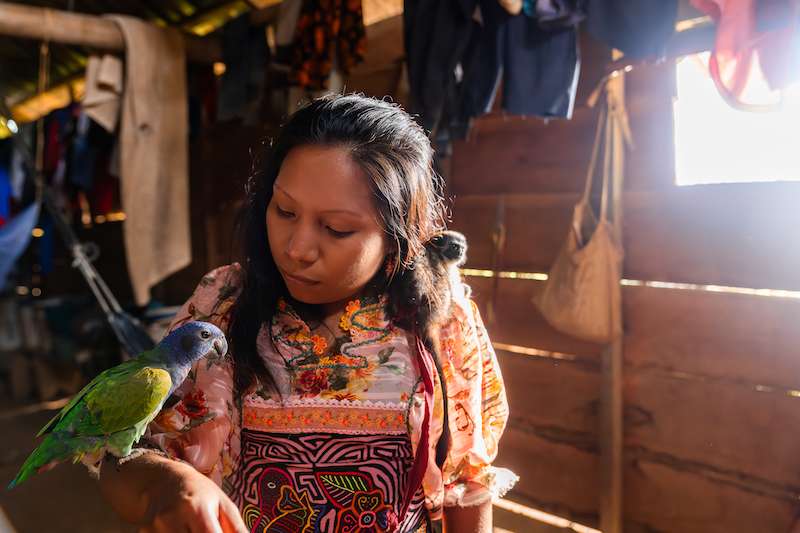
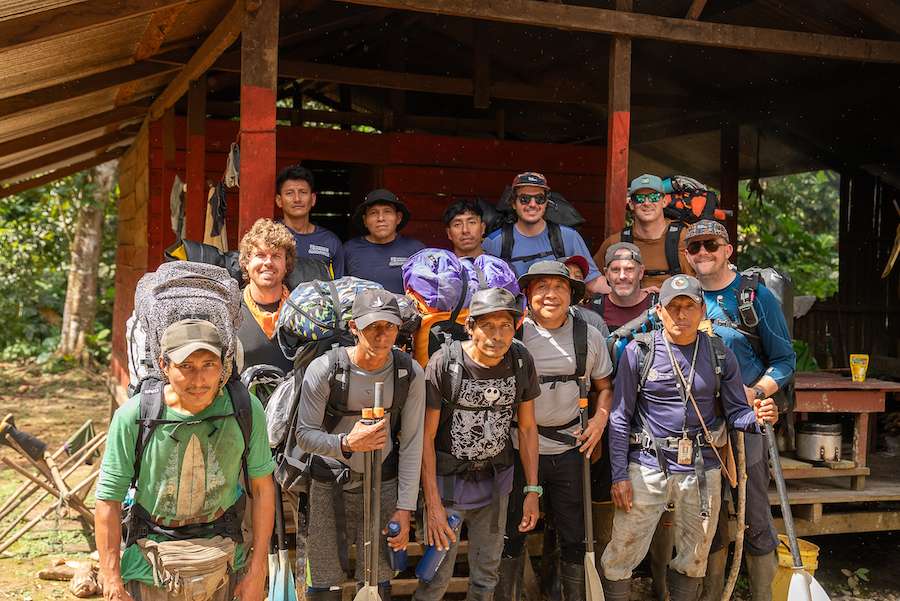
Getting through that comarca is the part most paddlers cannot replicate. Guide Mark Knetsch, founder and president of BioCultural Adventures, has spent years building relationships with the Guna, and on the strength of those the Guna Congress granted the expedition special permission to visit Gan Igar, a village few Westerners have seen. Herminio Hernández, Secretary of Defense for the Gunayala Comarca, joined partway through with a team of forest guardians, using the expedition as a monitoring and patrol exercise and as a test of whether drones could support forest monitoring in that terrain. Knetsch was born in Bonaire, raised in Aruba, spent about a decade in Canada and drove to Panama from Vancouver Island, where he has been since 2013.
The Route
The paddling broke into four pieces across roughly 17 miles of water, plus about 9 miles on foot.
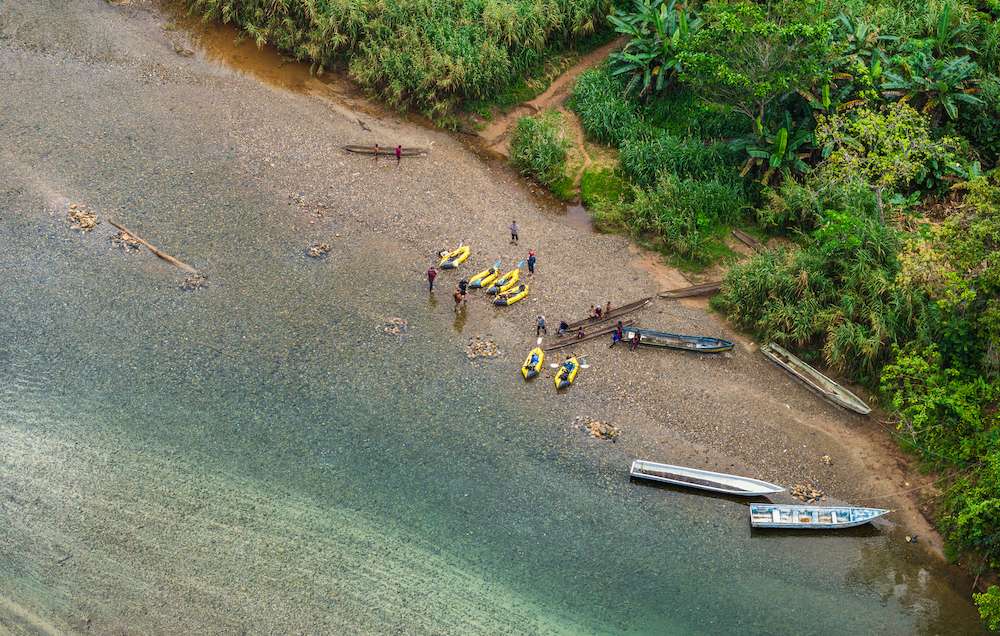
The crew started with 5 miles on the Mamoní on the Pacific side, then hiked 5 miles over the divide on the ancestral Guna trail from the Mamoní watershed to the Cangandí. From the first river input they ran 3 miles of the Cangandí down to a jungle camp. The next day’s section was the long one, 8 miles from camp to Gan Igar, with two portages: 80 yards over a rock pile, then 110 yards alongside Gangandí Falls. Nothing on the trip exceeded Class III.
The falls portage is where the only real damage happened. A raft caught a tropical vine studded with cat-claw thorns and popped. “That slowed us down for 30 minutes as we patched it up and reinflated it,” Hayter said. “I was surprised how durable the rafts were and how easy it was to repair the damaged one.”
From Gan Igar the crew hiked 4 miles to an unnamed stream feeding a channel, put in there and paddled 1.2 miles to the Bay of Mandinga, brackish for the first half and salt once the mangroves started. That channel is a canal cut more than a century ago by the United Fruit Company to move bananas from inland plantations out to the Caribbean. The crew reached it by hiking across an abandoned clandestine airstrip from the World War II era, which ends at the mouth of the canal. A 14-mile powerboat run took them out to the island.
The Jungle
“The trip went much smoother than I anticipated,” Hayter said, and he put most of that on Knetsch. “Mark was such an exceptional guide and is so comfortable operating in an environment that was completely foreign to the rest of us, that the experience was truly remarkable, really life changing, thanks to him and our MVP and Guna hosts.”
What wore them down was the walking. “Really the only difficult part was exhaustion from the relentless heat and humidity in the jungle during the hiking phases,” Hayter said. “It sucked the life out of us.” That, and the running fear that some insect or animal was going to kill them, which everyone got past at some point. The jungle was pristine enough, and the contact with flora and fauna they had never seen constant enough, that they kept their heads up and kept moving.
Two pieces of advice reset the kit before the crew got in the water. Nobody sleeps on the ground in the jungle, so the tents stayed home and the team hung Hennessy jungle hammocks above the pit vipers and cockroaches. And the knee-high rubber boots that sounded ridiculous for hiking in that heat, LaCrosse Granges, became the thing they lived in. The team had planned on sandals and light hikers and found out on day one that the assumption was wrong.
Water purification is not a thing in the jungle, and giardia is expected and common among the Guna. The crew ran MSR Guardian and Guardian Gravity purifiers, drank from the worst sources they could find to test the limits, and left the units behind with the Guna at the end, wishing they had brought more. The Bushnell optics stayed too, for wildlife research and work against poaching, illegal gold mining and unsanctioned timber cutting. Knetsch had given up on radios years ago, and the Rocky Talkie Mountain Radio was the first he had used that held range through that much vegetation and mountainous terrain and stood up to the wet.
New Lines
New Lines is Kokopelli’s idea that a packraft turns any body of water into part of your route, whether you got there biking, hiking or driving, so a straight line across a map stops being interrupted by water. But Berendes built the film around the second meaning: the lines the crew redrew in themselves through the crossing and through the people who hosted them.
For anyone who wants the same line, the Mamoní Valley Preserve begins offering the ocean-to-ocean expedition to travelers next year.
The Kit
The Kokopelli Nirvana self-bailing packrafts packed down to practically nothing on the trail and handled the rapids and rocks without incident. The TiZip zippers let the crew stow gear inside the hulls, which left room in the cockpit on the water and made packing fast after lunch breaks and morning starts.
The team spent weeks defining the kit and lining up brands before the trip, and some of what they brought came down to advice they did not want to hear.
There are zones in that corridor so dense that a helicopter rescue is not possible, which makes communication a safety item rather than a convenience. The crew carried Garmin handhelds and Rocky Talkie Mountain Radios. Knetsch, a longtime guide in Panama, had given up on radios years ago, and the Mountain Radio was the first he had used that held range through the vegetation and mountainous terrain and stood up to the wet.
The team intended to sleep in tents until Knetsch told them nobody sleeps on the ground in the jungle. Hennessy jungle hammocks kept them dry and off the floor, away from the no-see-ums, the cockroaches and whatever else was moving around down there after dark.
Knetsch also told them to wear knee-high rubber boots, which sounded wrong for hiking in that heat. The crew said “whatever” and planned on sandals and light hikers. The LaCrosse Grange boots turned into one of the biggest surprises of the trip, and they lived in them.
Water purification is not a thing in the jungle, and giardia is expected and common among the Guna. MSR’s Guardian and Guardian Gravity purifiers held up even as the crew drank from the worst sources they could find to test the limits. They left the units behind with the Guna at the end and wished they had brought more for the community.
Staying dry yourself is not an option out there, but keeping equipment dry is essential. SealLine Pro Dry Packs and PackTowl Personal towels kept gear dry and out of the sand and dirt on the trail, and Kokopelli’s Delta Dry Packs and Roll Top Dry Bags held up on the water.
GoPro supplied its latest models, and much of the footage in “New Lines – Panama” exists because of them.
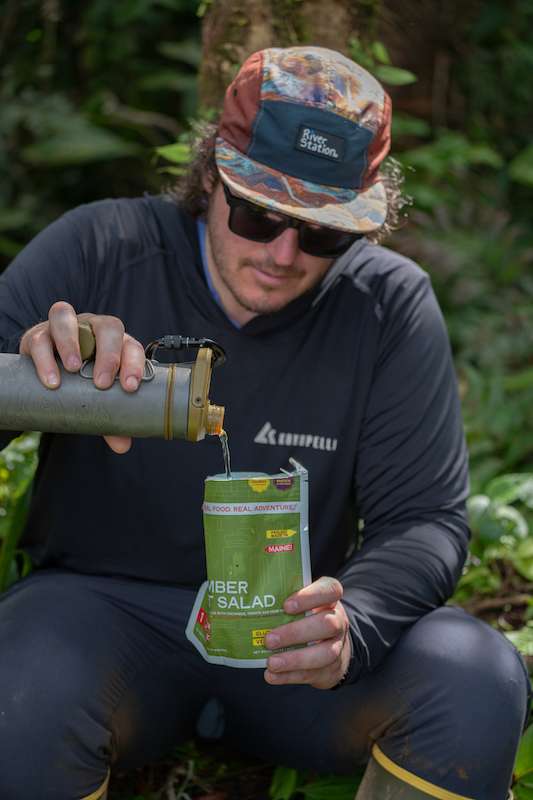
The jungle offers plenty of food in the form of fruit, fish and wild white-collared peccary, which is easy enough if you grew up with it, and less so if you are American. Good To-Go freeze-dried meals covered the gap.
Something was always watching them out there, toucans and monkeys and leaf-cutter ants among them. Bushnell gave the crew the means to watch back, with binoculars, trail cameras and night vision monoculars. The optics opened up a side of the forest the crew would otherwise have missed, and they left the equipment behind with their guides and Guna hosts for wildlife research and for work against poaching, illegal gold mining and unsanctioned timber operations.
River Station throw bags and accessories earned their place on the portages and around camp, with functional design and good looks.
Film: “New Lines – Panama,” filmed and directed by Josh Berendes. Photos: Kokopelli Packraft/Josh Berendes.